


What Is Personalized Treatment Plans?
- Jul 2
- 6 min read
You may have heard the phrase and wondered, what is personalized treatment plans, and how is that different from standard care? The short answer is simple: a personalized treatment plan is a care strategy built around you, not just your diagnosis. It takes your symptoms, health history, lifestyle, goals, and response to treatment into account so your care can be adjusted in a way that makes sense for your body.
For many people, this matters because generic recommendations often fall short. Two people can both have migraines, back pain, fatigue, or stress-related symptoms and still need very different support. One person may need pain relief first so they can sleep and function. Another may need help calming the nervous system, improving digestion, or addressing underlying patterns that may be contributing to the same complaint.
What is a personalized treatment plan?
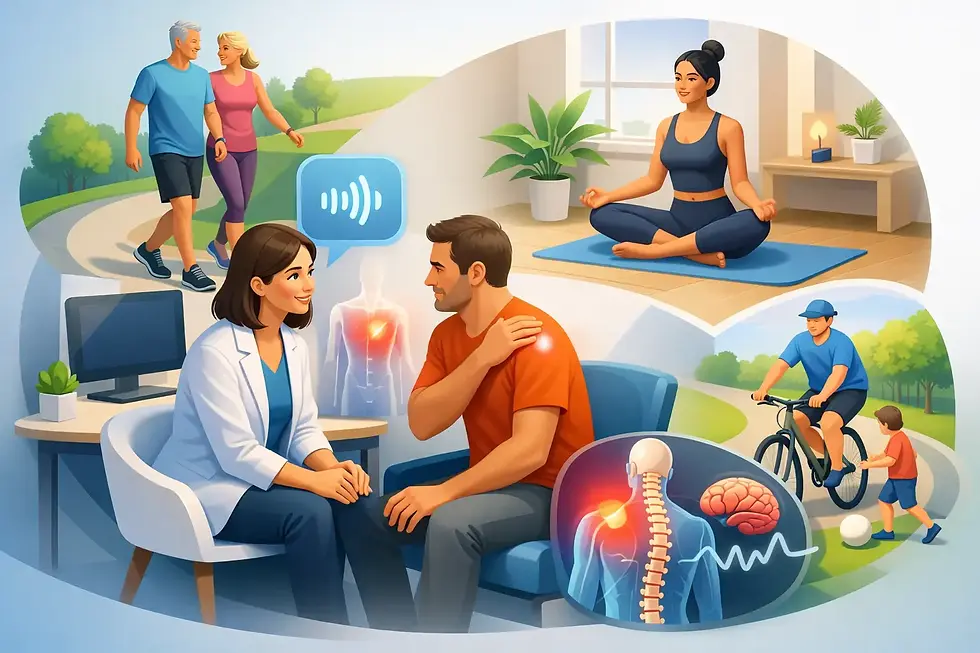
A personalized treatment plan is an individualized roadmap for care. Instead of using the same approach for everyone with a similar symptom, a practitioner looks at the whole picture and creates a plan based on what is most relevant to that person.
In natural healthcare, that often means asking questions beyond where it hurts. You may be asked about energy, sleep, appetite, stress levels, digestion, mood, old injuries, and what makes symptoms better or worse. The goal is not to make the process complicated. The goal is to understand why your symptoms may be showing up the way they are and what kind of support is most likely to help.
A good treatment plan also changes over time. It is not a fixed script. If your pain improves but your sleep is still poor, the focus may shift. If your headaches become less frequent but stress remains high, your care may be adjusted again. Personalized care is not just custom at the beginning. It stays responsive as your body changes.
Why personalized treatment plans matter
Many patients seek natural care after trying several options that gave only partial relief. They may have been told to rest, stretch, take medication, or wait it out. Sometimes those recommendations help. Sometimes they do not go far enough.
That is where personalized treatment plans can make a meaningful difference. They recognize that symptoms do not happen in isolation. Pain can affect sleep. Poor sleep can worsen inflammation, stress, and energy. Digestive issues can influence mood and focus. Hormonal shifts can affect pain sensitivity, headaches, and fatigue. When care accounts for those connections, treatment often feels more relevant and more practical.
Personalized care also helps set realistic expectations. Some concerns respond quickly. Others take time and steady support. A thoughtful plan can help you understand what the first phase of care should focus on, how progress will be measured, and when it makes sense to adjust the strategy.
What is personalized treatment plans in a natural healthcare setting?
In a natural healthcare clinic, personalized treatment planning usually means combining several forms of support based on your needs rather than relying on a single method for everyone.
For one person, the plan may center on acupuncture for pain relief and nervous system regulation. For another, it may include acupuncture plus herbal support, diet recommendations, or therapies that help reduce inflammation and improve recovery. Someone dealing with chronic tension and poor sleep may need a gentler, calming approach at first. Someone with a flare-up of musculoskeletal pain may need more symptom-focused care early on.
This is especially important when a clinic offers multiple services. The value is not just having many options. The value is knowing when each option makes sense, when to combine them, and when to keep things simple. More treatment is not always better. Better matched treatment is what matters.
What goes into an individualized plan
A personalized plan usually starts with careful listening. Your practitioner wants to know what you are experiencing, how long it has been going on, what you have already tried, and what you want to get back to doing.
That last part is often overlooked, but it matters. Relief is not only about reducing a number on a pain scale. It may mean being able to sit through a workday without constant neck tension, sleep through the night, keep up with your kids, return to exercise, or feel mentally clear again.
From there, several factors shape the plan: the severity of symptoms, how long the issue has been present, your overall health, your stress load, and how sensitive your system is right now. A person with long-standing pain and burnout may need a slower pace than someone dealing with a recent strain. A person who is already taking several supplements may need a more selective approach than someone who is starting from scratch.
This is also where trade-offs come in. Some people want the most direct route to symptom relief. Others want a slower, steadier plan with fewer changes at once. Neither approach is automatically right or wrong. It depends on your comfort level, health goals, and what your body can tolerate.
How acupuncture fits into personalized care
Acupuncture works especially well within a personalized model because treatment can be adapted from visit to visit. Point selection, treatment frequency, and overall goals can shift depending on how you are doing.
If your main issue is lower back pain, treatment may focus first on pain reduction, mobility, and calming muscle tension. If you also have stress, digestive upset, or poor sleep, those patterns can be considered as part of the same plan. This whole-person view is one reason many patients feel heard in an acupuncture setting.
Personalized care may also include supportive therapies beyond needle acupuncture. In some cases, laser acupuncture is a good fit for patients who want a very gentle option. Herbal medicine, frequency specific microcurrent, whole-food supplements, and diet or lifestyle guidance may also be recommended when appropriate. The key word is appropriate. Recommendations should fit the person, not just the service menu.
At Acupuncture of West Michigan, this kind of individualized care is central to the patient experience. The focus is not on offering a generic wellness package. It is on understanding what is keeping you from feeling like yourself and building a plan that supports real progress.
What a good personalized treatment plan should feel like
A good plan should feel clear, not confusing. You should understand what the practitioner is treating, why certain therapies are being recommended, and what the near-term goal is.
It should also feel flexible. If something is not helping as expected, your care should be reassessed. If you improve quickly in one area, the plan should evolve. Personalized care is active, not passive.
Most of all, it should feel respectful of your experience. When people have been dealing with pain, fatigue, or chronic stress for a long time, they often want two things at once: real expertise and real listening. Effective treatment plans make room for both.
When personalized care makes the biggest difference
Almost anyone can benefit from individualized care, but it tends to matter even more for complex or ongoing concerns. Chronic pain, recurring headaches, stress-related symptoms, sleep issues, hormone-related shifts, digestive complaints, and low energy often do not respond well to a one-size-fits-all approach.
It can also make a difference when symptoms overlap. Many adults are not dealing with just one issue. They may have neck tension, poor sleep, irritability, and afternoon fatigue all at the same time. Treating only the loudest symptom may bring partial relief, but it may not change the bigger pattern that keeps pulling them back.
That said, personalized treatment is not magic, and it does not mean instant results. Some conditions improve in a few visits. Others require consistency and adjustment. A good practitioner will be honest about that while still giving you a clear sense of direction.
The real goal of personalized treatment plans
The real goal is not to make care feel exclusive or complicated. It is to make care more useful. When treatment matches the individual, people often feel more supported, more confident in the process, and more likely to stay consistent long enough to see meaningful change.
If you have been wondering whether custom care is worth it, consider this: your symptoms may have a familiar name, but your experience of them is still your own. The plan built around that reality is often the one that gives you the best chance to feel better, function better, and feel like yourself again.
The right treatment plan should meet you where you are today while keeping sight of where you want to go next.


Comments